
Party Wall Timeline for Lofts & Extensions in SW London
When to serve party wall notices for a loft or extension, what each notice period means, and a week-by-week timeline from drawings to start.
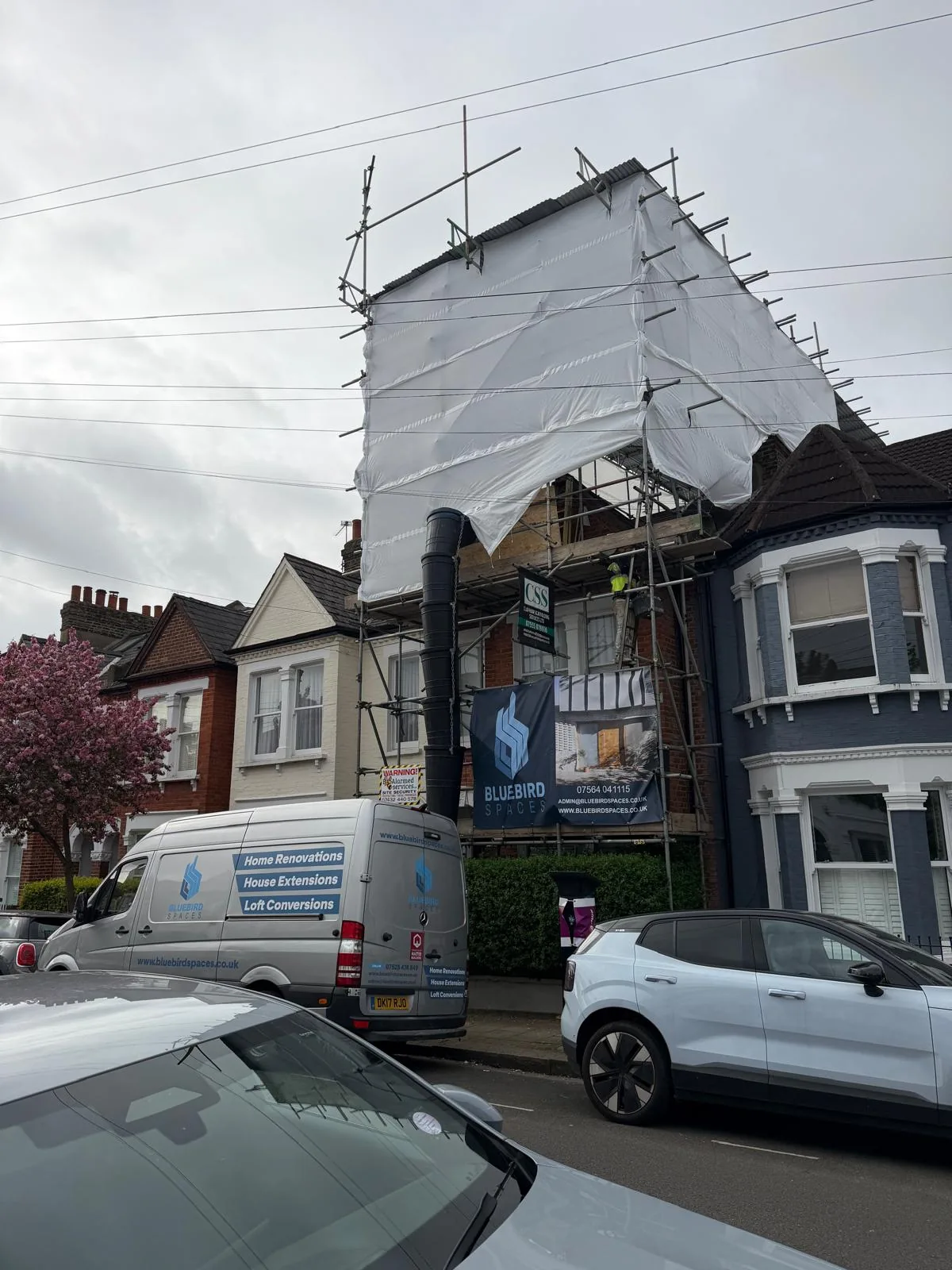
Most lofts and rear extensions on South West London terraces and semis involve the Party Wall etc. Act 1996. Steel beams go into the shared wall, chimney breasts come out, and foundations get dug close to next door's. The Act itself isn't complicated. What catches people out is the timing. Serve notices too late and your start date slips. Serve them too early and they can lapse.
Most party wall guides are written by surveyors. This one looks at the process from the builder's side: what needs to be ready before you serve, and how the statutory clock fits around planning and your start date.
Which works trigger which notice
The GOV.UK party walls guide says you must tell your neighbour if you want to build on or at the boundary, work on an existing party wall, or dig below and near their foundations. The government's explanatory booklet sets out three main types of notice.
Section 2: work to an existing party wall (2 months' notice)
This is the one most lofts need. The booklet's own examples include cutting into a party wall "to take the bearing of a beam (for example for a loft conversion)", and cutting off projections such as a chimney breast. Raising a party wall, which is common in hip-to-gable work on semis, is also covered. You must give at least two months' notice.
Section 1: a new wall on the boundary (1 month's notice)
If your extension needs a new wall built on or up to the line of junction with next door, for instance a side-return infill against the boundary, you serve a line of junction notice at least one month before.
Section 6: excavation near a neighbour's foundations (1 month's notice)
This applies if you dig within 3 metres of a neighbouring building and go deeper than its foundations. It also applies within 6 metres if your excavation would cut a line drawn down at 45° from the bottom of their foundations. Rear extension foundations often trigger this. You need one month's notice.
A single project often needs more than one notice. A loft with a rear extension, for example, might need section 2 and section 6 notices for each adjoining owner. Under the Act, "owner" includes a leaseholder with a lease of more than a year, so a flat conversion next door can mean several sets of notices.
Consent, an agreed surveyor, or two surveyors
Once you've served notice, your neighbour has 14 days to respond in writing. According to GOV.UK and the booklet, they can:
- Consent in writing. You can proceed once the notice period ends, or earlier if they agree in writing. A schedule of condition (a record of their property before work starts) isn't required by the Act, but the booklet calls it "most prudent".
- Dissent, or simply not reply. For section 2 and section 6 notices, silence after 14 days means a dispute is "deemed" to have arisen. You can't treat no reply as a yes.
- Serve a counter-notice asking for extra works for their own benefit. They must do this within a month and pay for those works.
If there's a dispute, you either agree on one "agreed surveyor" or each side appoints its own surveyor. The surveyors then produce a party wall award, a legal document setting out what work happens, how and when, and who pays.
If your neighbour won't appoint a surveyor, section 10(4) of the Act lets you appoint one on their behalf. You can do this if they refuse, or if they fail to appoint for ten days after you serve a written request.
Who pays?
The booklet says that "usually the Building Owner will pay all costs associated with drawing up the award including the adjoining owner's surveyor's fees", where the works are solely for your benefit. There are no set fees, and the Act provides for "reasonable costs". This is one reason the booklet suggests a single agreed surveyor is often preferable for straightforward residential work.
A week-by-week timeline
The table below is an illustrative plan for a typical terrace loft with a rear extension, working towards a fixed start date. The notice periods, the 14-day response window, the 10-day surveyor request and the 14-day appeal window come from the Act and the government booklet. Everything else is a planning assumption. How long surveyors take to agree an award varies, so ask your surveyor for their likely timescale.
| Week | What happens | Statutory or assumption? |
|---|---|---|
| 1–2 | Measured survey and design. Structural engineer confirms where steels bear on the party wall and the foundation depths. | Assumption |
| 2–3 | Talk to your neighbours informally. Show them the drawings and explain the programme. | Good practice (GOV.UK suggests speaking first) |
| 3 | Serve notices: section 2 (loft steels, chimney breast) and section 6 (extension foundations) on each adjoining owner, with drawings. | Act: s.2 needs 2 months, s.6 needs 1 month |
| 5 | 14-day response deadline. Consent means you plan the schedule of condition. Dissent or silence means a dispute and appointing surveyors. | Act: 14 days |
| 5–6 | If the neighbour hasn't appointed a surveyor, serve a written request. After 10 days you can appoint on their behalf. | Act s.10(4): 10 days |
| 6–8 | Surveyors inspect, and the schedule of condition of the neighbour's property is recorded. | Assumption |
| 7 | Section 6 one-month notice period ends. | Act |
| 8–11 | Surveyors agree and serve the award. | Assumption: varies |
| 11–12 | Section 2 two-month notice period ends. Either owner has 14 days from service of the award to appeal to the county court. | Act |
| 12+ | Earliest realistic start for party-wall works, unless your neighbour agrees in writing to an earlier date. | Act + assumption |
Notices are only valid for a year, so don't serve them too early. The booklet warns: "do not serve it too long before you wish to start."
How this fits with planning
Party wall and planning run on separate tracks. GOV.UK points out that party wall agreements are different from planning permission and building regulations. You can serve notices while an LDC or householder application is being decided, provided the structural design is settled enough to describe the work. Both planning routes have an eight-week target. If you serve notices around the time you submit, the two clocks often run in parallel rather than one after the other.
Protecting the neighbour relationship
- Talk before you post anything. A notice through the letterbox with no warning is more likely to get a dissent.
- Share the programme. Tell them when the noisiest work (steels going in, digging) will happen.
- Take the schedule of condition seriously. It protects both sides if cracks appear later.
- Access needs 14 days' notice. If scaffold or workers need access to next door, the Act requires 14 days' notice except in emergencies. It's worth mentioning in your original notice.
- Make good any damage. GOV.UK says you must protect your neighbour's property and fix or pay for any damage.
Party wall checklist
- Structural engineer's design confirms beam bearings and foundation depths
- All adjoining owners identified, including leaseholders on leases of more than a year
- Section 1, 2 and 6 notices drafted (GOV.UK has example letters)
- Notices served at least 2 months (s.2) or 1 month (s.1/s.6) before the start
- 14-day response dates in the diary
- Surveyor arrangement agreed (agreed surveyor or two)
- Schedule of condition recorded
- Award received, and 14-day appeal window passed
- Start date confirmed with the builder
FAQ
Do I need a party wall agreement for a loft conversion?
Usually yes, if you're on a terrace or semi. Inserting steel beams into the party wall is a section 2 notifiable work, so you must serve notice at least two months before starting. If your neighbour consents in writing, you don't need an award.
How long does the party wall process take?
The minimum is set by the notice periods: two months for party wall works, one month for boundary walls and excavation. If there's a dispute, add the time surveyors take to agree an award. That varies, so plan in a buffer.
What happens if my neighbour doesn't respond to a party wall notice?
For section 2 and section 6 notices, no reply within 14 days means a dispute is deemed to have arisen. Surveyors then need to be appointed. If your neighbour still won't appoint one, you can appoint on their behalf after a 10-day written request.
Who pays for the party wall surveyor?
Usually the building owner (the person doing the work) pays for drawing up the award, including the neighbour's surveyor, where the work is solely for their benefit. Fees aren't fixed.
How long is a party wall notice valid for?
A year. If work hasn't started in that time, you'll need to serve fresh notices.
Planning a loft or extension next to a neighbour?
We plan the party wall timing alongside the build programme, so your start date is realistic from day one. You can read more about how we work, or see our loft conversion and house extension services. Call 07564 041115 or email admin@bluebirdspaces.co.uk.
General guidance, not legal advice. For disputes, speak to a party wall surveyor or solicitor. Sources checked 2 October 2026.