
Loft LDCs in SW London: Refusal Rates by Borough
How lawful development certificates for lofts work, how often SW London councils refuse them, and the PD rules that trip applications up.
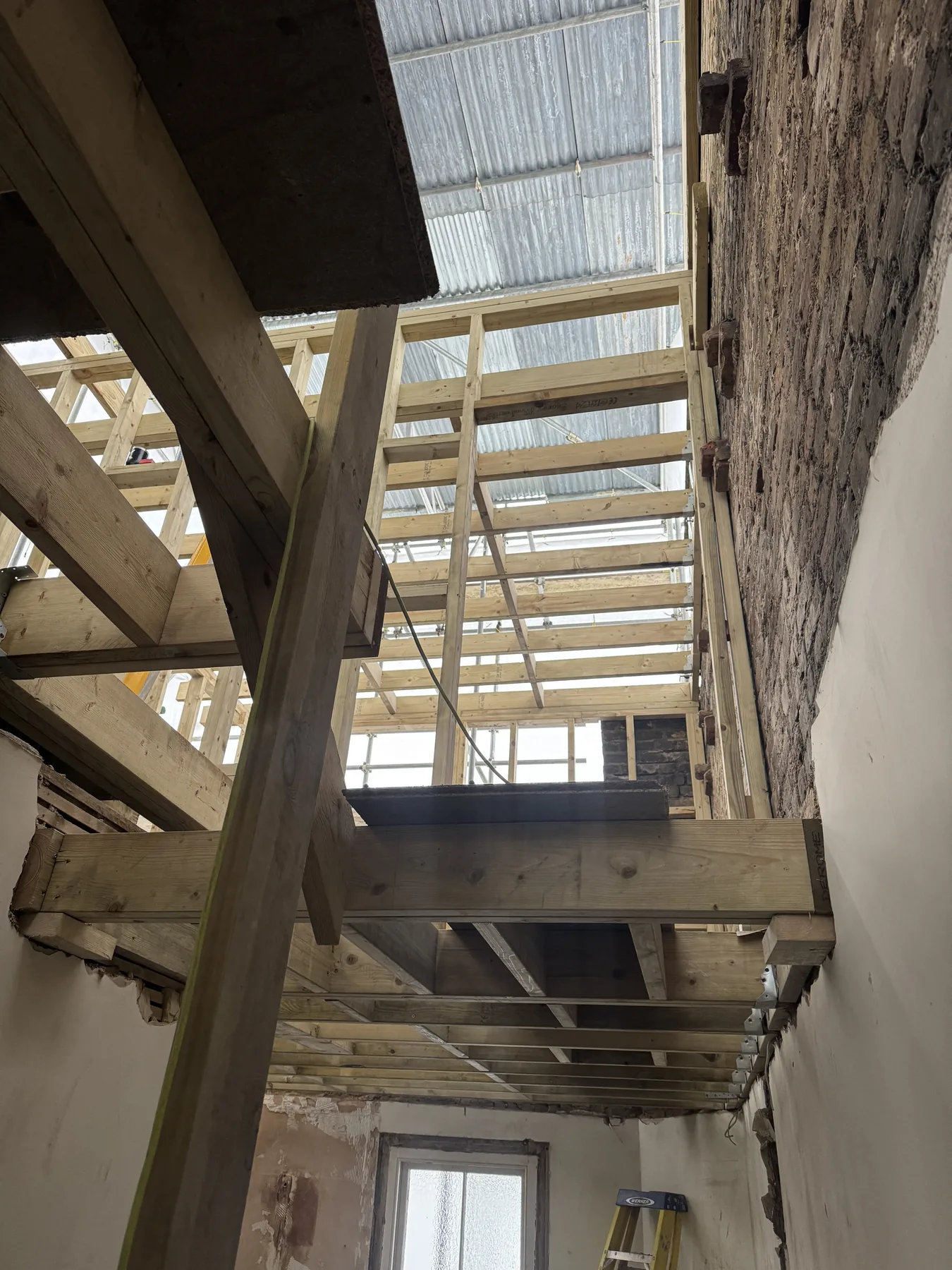
If your loft conversion fits within permitted development (PD), you don't need planning permission. But most homeowners in Wandsworth, Merton and the surrounding boroughs still apply for a Lawful Development Certificate (LDC) before they build. It's the council's written confirmation that the work is lawful, and buyers' solicitors, lenders and building control often want to see one.
LDCs aren't a formality, though. Councils refuse a real share of them. This guide covers what an LDC is, how often they're refused locally, and which PD rules applications most often fall foul of.
What an LDC is, and what it isn't
A certificate, not a permission
The GOV.UK guidance on lawful development certificates describes two types. One is for an existing use or building (section 191). The other is for proposed work (section 192). For a loft you haven't built yet, you want the proposed type.
An LDC doesn't grant planning permission. It confirms that, on the facts you've given, the work wouldn't need permission. The council isn't judging whether your dormer looks nice. It's checking your drawings against the PD rules. That's why accuracy matters so much: the guidance says that without "sufficient or precise information, a local planning authority may be justified in refusing a certificate".
Fees and timings
- Fee: a proposed-use LDC costs half the full application fee. For a house in England that's £274 from 1 April 2026, against £548 for a householder application (government fee schedule, April 2026).
- Decision time: you can appeal if the council hasn't decided within 8 weeks (GOV.UK: appeal an LDC decision).
- Appeals: if you're refused, GOV.UK says there's "normally no deadline" to appeal, except for listed-building certificates. You can also fix the problem and reapply, which is often quicker.
How often are loft LDCs refused in SW London?
We looked at proposed-use LDC applications in the Planning London Datahub (the GLA's London-wide planning database) for applications validated between 2 October 2025 and 1 October 2026.
Based on the Planning London Datahub, 2 October 2026 pull:
| Borough | Proposed-use LDCs | Granted | Refused | Refused as % of decided | Loft-related subset: refused / decided |
|---|---|---|---|---|---|
| Wandsworth | 283 | 217 | 39 | 15% | 13 / 118 (11%) |
| Lambeth | 230 | 167 | 31 | 16% | 6 / 85 (7%) |
| Kingston | 312 | 244 | 42 | 15% | 24 / 169 (14%) |
| Merton | 291 | 215 | 10 | 4% | 4 / 112 (4%) |
| Richmond | 421 | 302 | not coded | n/a | n/a |
How to read this (please do):
- "Decided" means granted plus refused. Applications that are still pending, withdrawn or coded differently are left out. Wandsworth had 26 with no decision yet; Merton had 65.
- The "loft-related subset" picks out descriptions mentioning loft, dormer, mansard, hip-to-gable, roof extension or rear roof. Keyword matching is approximate.
- Richmond doesn't use a "Refused" code in the Datahub. Its LDCs show as Approved, Closed or undecided, so we haven't calculated a rate.
- Councils record decisions differently, and the Datahub is updated continually. Treat these as indicative, not official statistics. Check the council's own register for any individual case.
The headline: in Wandsworth, Lambeth and Kingston, roughly one in seven proposed-use LDCs decided in the past year was refused. Merton's rate was much lower. Loft-related LDCs did a little better than average in Wandsworth and Lambeth. Either way, a refusal usually means a redesign, a new application and another wait of up to eight weeks before you can start.
The PD loft rules that catch people out
These are the Class B rules set out in the government's householder PD technical guidance and on the Planning Portal's loft page. An LDC is only as good as the drawings' compliance with them.
1. The volume limit, including what's already there
The extra roof space can't exceed 40 m³ for a terraced house or 50 m³ for other houses. Crucially, "any previous enlargement to the original roof space in any part of the house must be included". If a previous owner added a small dormer, it eats into your allowance.
Illustrative worked example (not a real project): a mid-terrace with a rear box dormer roughly 4.5 m wide, 2.4 m high at its face and running 3.0 m back into the roof adds about ½ × 4.5 × 2.4 × 3.0 ≈ 16.2 m³. An L-shaped dormer over the back addition, about 2.5 m wide, 2.3 m high and 5 m long, adds about ½ × 2.5 × 2.3 × 5 ≈ 14.4 m³. Total: about 30.6 m³, so it's inside the 40 m³ terrace limit. But if the house already has a 10 m³ dormer from the 1990s, the total becomes about 40.6 m³, which is over. Real calculations should come from a measured survey and be shown on the drawings.
2. Flats and maisonettes have no Class B rights
The rules apply to houses only. If your "house" is legally two flats, or you own an upper maisonette, there's no loft PD and an LDC will be refused. You'll need full planning permission.
3. Conservation areas and other Article 2(3) land
Roof extensions aren't PD in conservation areas. If you're in one, a householder application is the right route, and an LDC will be refused. (See our separate guide on Wandsworth's Article 4 and conservation areas.) Article 4 Directions can also remove PD rights outside conservation areas, so check with the council.
4. The front roof slope and the ridge
No part of the enlargement can go higher than the existing roof. Nothing can project beyond the plane of a roof slope that forms the principal elevation and faces a highway. Corner houses can be tricky, because deciding which elevation is "principal" is a judgement.
5. The 20 cm eaves set-back, and overhangs
Except for hip-to-gable work and roofs that join an extension, the enlargement must be set back "so far as practicable" at least 0.2 m from the original eaves. It also mustn't overhang the outer face of the wall. Drawings that show dormers flush with the eaves are a common avoidable problem.
6. Balconies, materials and side windows
Balconies, verandas and raised platforms aren't PD. A Juliet balcony with no platform normally is. Materials must look similar to the existing house. Side-facing windows must be obscure-glazed and non-opening below 1.7 m above the floor.
What to send so it's approved first time
- Accurate existing and proposed drawings: plans, all elevations and sections, at a stated scale, showing the original roof.
- A volume calculation shown on the drawings, including any previous roof enlargements.
- Clear notes on materials, the eaves set-back and obscure glazing.
- A precise description of the work. The GOV.UK guidance stresses that it must describe precisely what's being applied for.
- A check of the planning history for previous extensions or conditions that removed PD rights. Your designer can search the council register.
You apply through the Planning Portal or the council's own system. Allow up to eight weeks, and don't book a start date that relies on a faster answer.
FAQ
Do I need a lawful development certificate for a loft conversion?
It isn't a legal requirement if your loft is genuinely permitted development. Many homeowners get one anyway, because it's formal proof for future buyers, lenders and building control that planning permission wasn't needed.
How long does an LDC take?
Councils are expected to decide within eight weeks. You can appeal for non-determination if they don't (GOV.UK). Some decisions arrive sooner, but don't plan on it.
Is an LDC the same as planning permission?
No. An LDC confirms the work doesn't need planning permission because it falls within PD rules. The council checks compliance with the rules, not design quality.
Can I appeal a refused LDC?
Yes. GOV.UK says there's normally no deadline for LDC appeals, except for listed-building certificates. Often the quicker fix is to correct the drawings and reapply.
Why are some loft LDCs refused?
Common causes, based on the PD rules, include exceeding the 40 m³ or 50 m³ volume limit once earlier enlargements are counted, applying for a flat or maisonette, being in a conservation area, and dormers that don't meet the eaves set-back.
Get a second pair of eyes before you apply
If you're planning a loft and want to talk through whether the LDC route really fits your house, we're happy to help. Bluebird Spaces builds loft conversions across South West London, including Wandsworth and Wimbledon. For budgeting, see our loft conversion cost guide. Call 07564 041115 or email admin@bluebirdspaces.co.uk.
General guidance, not planning advice. Refusal figures are based on the Planning London Datahub, 2 October 2026 pull, and may differ from councils' own records. Sources checked 2 October 2026.